
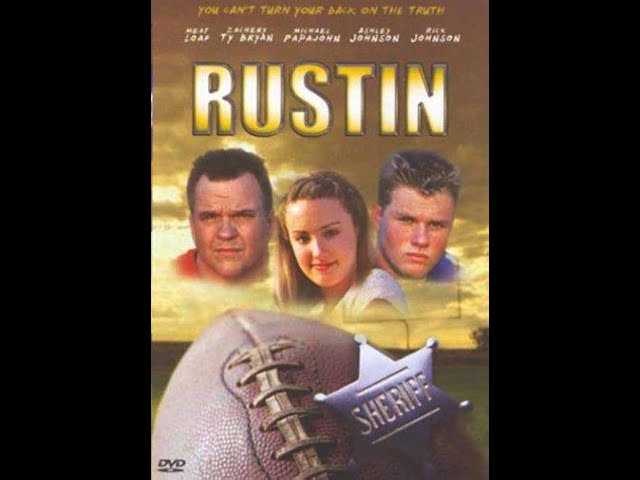
In 2001, former NFL quarterback Rick Johnson took on dual roles as director and star of “Rustin,” a small-town drama that explores themes of redemption, past mistakes, and the complexities of small-town life in Alabama. Having watched this independent film recently, I found myself drawn to its intimate portrayal of how one man’s past comes back to challenge his carefully constructed present, even if the execution doesn’t always match its ambitious vision.
Plot and Setting
What struck me most about the film is how it uses the picturesque small-town Alabama setting not just as a backdrop, but as almost a character itself. The story follows Billy Stagen, a former professional football player who has returned to his hometown of Rustin to serve as the local sheriff. Watching Johnson navigate this dual role of respected lawman and man with secrets, I appreciated how the film captures that suffocating quality of small towns where everyone knows your business, yet somehow major secrets can still lurk beneath the surface.
Cast and Performances
The film features an ensemble cast led by Rick Johnson himself in the role of Billy Stagen. The cast includes notable performers such as Meat Loaf, Ashley Johnson, and Zachery Ty Bryan. Additional cast members include Michael Papajohn, Shanessa Sweeney, Lee Everett, Shawn Weatherly, and Leland L. Jones.
Rick Johnson, who transitioned from his NFL career to filmmaking, brought a unique perspective to the project that I found genuinely intriguing. Having seen athletes attempt the transition to entertainment before, I was curious to see how Johnson would handle both sides of the camera. His previous appearances in films such as “Point of Betrayal” (1995) and a small role in “Jerry Maguire” (1996) gave him some acting experience before taking on the ambitious dual role in “Rustin.”
The inclusion of Meat Loaf immediately caught my attention—there’s something about his screen presence that adds gravitas to any project, and the DVD of “Rustin” is no exception. I was also pleased to see Ashley Johnson in an early role, knowing her later success in voice acting and television. Zachery Ty Bryan’s casting felt like a smart choice for audiences familiar with his “Home Improvement” persona, though I found myself occasionally distracted by those associations while watching.
Critical Reception and Reviews
After watching “Rustin,” I can understand why it received such mixed reviews. On IMDb, the film holds a rating of 5.8 out of 10, which honestly feels about right to me—it’s neither terrible nor exceptional, but somewhere in that middle ground where good intentions meet uneven execution.
What I found most telling was the limited coverage from major critics, suggesting the film may have had distribution challenges that prevented it from reaching a wider audience. However, the user reviews that do exist provide some valuable insights. I particularly connected with one viewer’s observation that it was “a very enjoyable movie with a very good vision of football in Alabama,” though I also understood their note about the “somewhat cynical view” the film takes.
Personally, I appreciated how the film integrated football culture into its narrative without making it the sole focus. As someone who’s spent time in the South, I found the portrayal of how football permeates community identity to be fairly authentic, even if some of the dialogue felt forced at times.
Production and Direction
Watching “Rustin” as both a directorial debut and starring vehicle for Rick Johnson, I couldn’t help but admire the ambition behind the project. Taking on multiple roles in filmmaking is challenging enough for seasoned professionals, let alone someone transitioning from professional sports. The movie was clearly crafted as an independent production, and while this shows in the budget constraints, I found myself respecting the intimate scale it allowed.
The PG-13 rating felt appropriate for the material, though I occasionally wondered if the film might have benefited from pushing into more mature territory given some of the heavier themes it attempts to tackle.

Conclusion
Having spent time with “Rustin” (2001), I came away with mixed but ultimately positive feelings about this independent effort. While it certainly didn’t achieve significant commercial or critical acclaim, I found myself respecting Rick Johnson’s ambitious vision and his successful transition from professional sports to filmmaking, even if the results were uneven.
What I appreciated most was the film’s sincere attempt to explore meaningful themes—redemption, the weight of our past decisions, and the unique pressures of small-town life. These are universal concepts that I think most viewers can relate to, regardless of whether they’ve lived in a place like Rustin, Alabama. The execution may not always match the ambition, but there’s something to be said for the honest effort.
I also found myself thinking about the film’s place in early 2000s independent cinema. This was an era when smaller films like this could still find their audience, before the landscape became quite as challenging for mid-budget independent productions. In that context, Johnson’s achievement feels even more noteworthy.
The modest reception shouldn’t overshadow what “Rustin” accomplishes as an independent production. Yes, it has its flaws—some pacing issues, occasionally stilted dialogue, and perhaps a scope that exceeds its grasp—but it also features genuine moments and a cast that, despite varying levels of experience, commits to the material. Meat Loaf’s presence alone made certain scenes more compelling than they had any right to be.
For viewers interested in small-town dramas or stories about former athletes grappling with their past, I’d say “Rustin” is worth seeking out, though with tempered expectations. It’s the kind of film that works best when you approach it as a sincere independent effort rather than expecting polished Hollywood storytelling.

Ultimately, while “Rustin” may not be remembered as a landmark film of its era, I see it as a testament to the independent spirit of filmmaking and proof that meaningful stories can emerge from unexpected places—even when they don’t quite stick the landing.